NEW VIDEOS
Here you can see two videos about matter and changes of matter.
Thanks to 6th grade blog, I took them from there :)

Here you can see two videos about matter and changes of matter.
Thanks to 6th grade blog, I took them from there :)
Hello my friends!!!
Here you can download the periodic table of elements, the regular one, where you willl find the name of the elements in Spanish, and the one with pictures, with the name of the elements in English.
Feed your curiosity!!!


Crazy about Wildlife!
I. Vocabulary
·enclosure
·picnic area
·pool
·reptile house
·aviary
·gift shop
·aquarium
·insect house
·extinct
·wild
·endangered
·threat
·population
·circus
·(to) prevent
·species
·research
·habitat
·donation
·adopt
II. Irregular Verbs
U1 – be | U2 – come | U3 – feel | U4 – hear | U5 – make | U6 – see |
U1 – become | U2 – cut | U3 – find | U4 – hide | U5 – mean | U6 – sell |
U1 – bite | U2 – dig | U3 – fly | U4 – hold | U5 – meet | U6 – send |
U1 – break | U2 – do | U3 – forget | U4 – hurry | U5 – pay | U6 – show |
U1 – bring | U2 – draw | U3 – get | U4 – hurt | U5 – put | U6 – sing |
U1 – build | U2 – drink | U3 – give | U4 – keep | U5 – read | U6 – sink |
U1 – bury | U2 – drive | U3 – go | U4 – know | U5 – ride | U6 – sit |
U1 – buy | U2 – eat | U3 – grow | U4 – learn | U5 – ring | U6 – sleep |
U1 – catch | U2 – fall | U3 – hang | U4 – leave | U5 – run | U6 – slide |
U1 – choose | U2 – feed | U3 – have | U4 – lose | U5 - say | U6 - speak |
III. Grammar
Going to : Future Plans and intentions
·We use going to to talk about future plans or intentions
e.g. My class is going to adopt a tiger.
The animals aren’t going to live in our house.
Going to : Predictions
·Also use going to to make predictions about things we can see.
e.g. It’s going to fall.
He’s going to climb the tree.
IV. Working with words
Suffix –er / -or
· We add suffixes –er or –or t some verbs to make nouns:
Verb: | Keep | Present | Sing | Invent | Act | Visit | Teach | Help | Direct | Calculate |
Noun: | Keeper | Presenter | Singer | Inventor | Actor | Visitor | Teacher | Helper | Director | Calculator |
V. Writing Skills
Topic Sentences and paragraphs
We use topic sentences at the beginning of a paragraph. It tells us what the paragraph is going to be about.
·Tigers are large, beautiful animals. They are wild cats…

I. Vocabulary
·(to) cut up
·(to) glue
·(to) stick
·(to) roll
·recycling center
·carrier bags
·oil
·batteries
·chemicals
·bottle bank
·metal
·paper
·juice carton
·bus ticket
·greeting cards
·bracelet
·ribbon
·map
·wrapping paper
·car tyres
II. Irregular Verbs
U1 – be | U2 – come | U3 – feel | U4 – hear | U5 - make |
U1 – become | U2 – cut | U3 – find | U4 – hide | U5 – mean |
U1 – bite | U2 – dig | U3 – fly | U4 – hold | U5 – meet |
U1 – break | U2 – do | U3 – forget | U4 – hurry | U5 – pay |
U1 – bring | U2 – draw | U3 – get | U4 – hurt | U5 – put |
U1 – build | U2 – drink | U3 – give | U4 – keep | U5 – read |
U1 – bury | U2 – drive | U3 – go | U4 – know | U5 – ride |
U1 – buy | U2 – eat | U3 – grow | U4 – learn | U5 – ring |
U1 – catch | U2 – fall | U3 – hang | U4 – leave | U5 – run |
U1 – choose | U2 – feed | U3 – have | U4 – lose | U5 - say |
III. Grammar
Will/Won’t
·We use will and won’t to make predictions about the future.
e.g. Now Chip will know how to do everything and he won’t make mistakes.
·Look! ‘ll = will won’t = will not
e.g. I’ll ride my bike to school tomorrow to save energy.
Present continuous with future meaning
·Use the present continuous to talk about future plans and arrangements.
e.g. Dad and I are taking our rubbish to the recycling center.
e.g. We’re arriving at two o’clock.
IV. Working with words
Prefix re-
· We add the prefix re- to some verbs to make a new verb
remove refill
reuse recharge
return rebuild
retell redecorate
recycle rewrite
V. Writing Skills
Making suggestions
We use these phrases to make suggestions:
Why not..? How about…? What about…?
When we make a suggestion, we give a reason for the suggestion.
Why not take old magazines to a local doctor’s surgery? They will put the magazines in the waiting room for the patients to read.
VI. Review
PERSONAL PRONOUNS | OBJECT PRONOUNS | POSSESSIVE ADJECTIVES (+ NOUN) | POSSESSIVE PRONOUNS |
I | ME | MY | MINE |
YOU | YOU | YOUR | YOURS |
HE | HIM | HIS | HIS |
SHE | HER | HER | HERS |
IT | IT | ITS | ITS |
WE | US | OUR | OURS |
YOU | YOU | YOUR | YOURS |
THEY | THEM | THEIR | THEIRS |
We have some books | The books are for us | These are our books | The books are ours |
S-P-E-L-L-I-N-G
As you know, for second term the spelling tests will count toward your grades. Here is the list of words for this week and remember; if you don’t understand the meaning - use your dictionaries!
Difference
Function
Exercise
Choose
Characteristics
Oxygen
Mammals
Extinction
Consolidation
Nutrition
Photosynthesis
Multicellular
Tissues
Residues
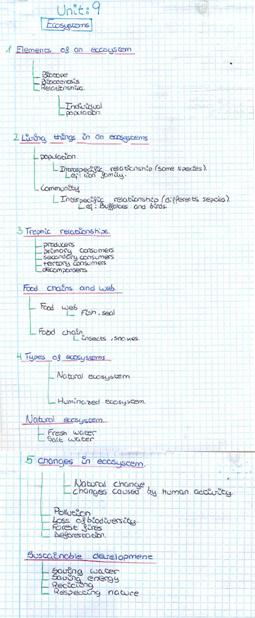
The last outline I´m going to post is this one, made by Leticia (5ºD).
Thank you very much!!!
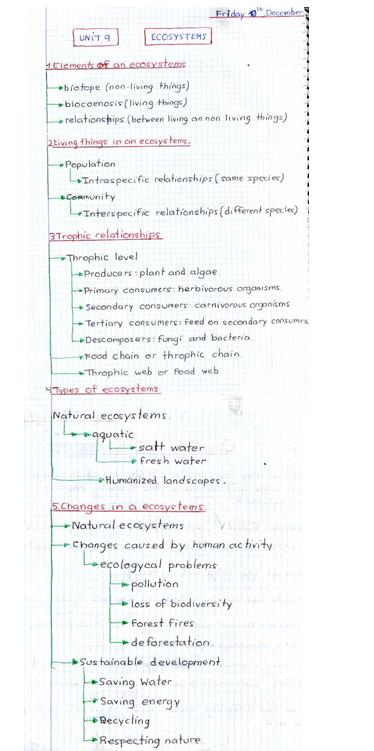
Again, another outline as an example!!!
Thanks, Jorge (5ºC).
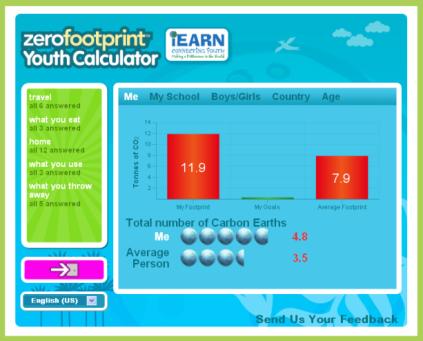
What is your footprint on Earth?
5ºA + 5ºB have taken this quiz to see "How many Earths do we need to satisfy all our needs" if everybody had the same habits as we have.
Those are the results.
We are over the average, and we need almost 5 planets to satisfy our needs.
Think about this.
You can take your own quiz here:
http://meetthegreens.pbskids.org/features/carbon-calculator.html
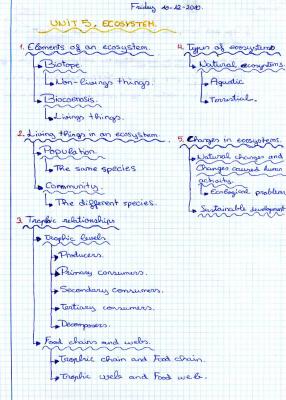
This is Iciar´s outline (5ºA).
Very nice, Iciar! Good job!
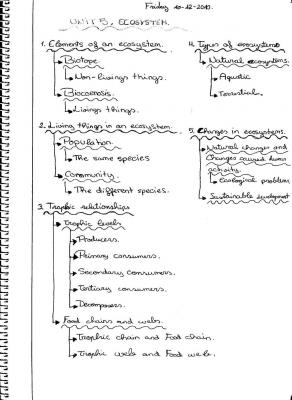
In this last unit of the year, you have done your own outline (congratulations to all of you).
Here you have an example from Raúl Herranz (5ºD). Than you very much for sharing with us your work.
Soon you´ll get some more examples.
I. Vocabulary
·(to) clean up
·damage
·the environment
·litter
·planet
·pollution
·rubbish dump
·wildlife
·alternative energy
·fossil fuels
·beams
·mud
·skylight
·solar panel
·electricity
·spring
·skylight
·technology
·greenhouse
II. Irregular Verbs
U1 – be | U2 – come | U3 – feel | U4 – hear |
U1 – become | U2 – cut | U3 – find | U4 – hide |
U1 – bite | U2 – dig | U3 – fly | U4 – hold |
U1 – break | U2 – do | U3 – forget | U4 – hurry |
U1 – bring | U2 – draw | U3 – get | U4 – hurt |
U1 – build | U2 – drink | U3 – give | U4 – keep |
U1 – bury | U2 – drive | U3 – go | U4 – know |
U1 – buy | U2 – eat | U3 – grow | U4 – learn |
U1 – catch | U2 – fall | U3 – hang | U4 – leave |
U1 – choose | U2 – feed | U3 – have | U4 – lose |
III. Grammar
Past simple and past continuous
·Use the past simple to talk about actions that interrupted other actions in the
past.
e.g. Some children were playing when we arrived.
·Use the past continuous to talk about the actions that were interrupted.
e.g. Some children were playing when we arrived.
Used to
·Use used to to talk about habits and situations in the past that are not true
now.
e.g. There used to be lots of litter here.
e.g. The park used to look horrible.
IV. Working with words
Compound nouns
·Sometimes putting two words together to make compound nouns:
e.g. wildlife park
rubbish dump
swimming pool
police station
computer room
post office
V. Writing Skills
Making writing more fluent
·Use compound sentences to make writing more fluent. Make a compound
sentence using words like: and, or, so and because to join simple sentences
together.
·Simple sentences: There are skylights in the roof. We save electricity
·Compound sentences: There are skylights in the roof so we save electricity.
I. Vocabulary
·sponge
·lampshade
·feather duster
·rubber gloves
·washing line
·broom
·sack
·cloth
·parade
·masks
·dancers
·stilts
·crowd
·float
·microphone
·speakers
II. Irregular Verbs
U1 – be | U2 – come | U3 – feel |
U1 – become | U2 – cut | U3 – find |
U1 – bite | U2 – dig | U3 – fly |
U1 – break | U2 – do | U3 – forget |
U1 – bring | U2 – draw | U3 – get |
U1 – build | U2 – drink | U3 – give |
U1 – bury | U2 – drive | U3 – go |
U1 – buy | U2 – eat | U3 – grow |
U1 – catch | U2 – fall | U3 – hang |
U1 – choose | U2 – feed | U3 – have |
III. Grammar
Comparatives and Superlatives
·Comparatives are adjectives that compare 2 things to each other.
e.g. This year, the carnival will be better than last year
Comparatives are formed from adjectives in 2 ways:
·When the adjective is 1 syllable we add –er to it.
·When the adjective is more than 1 syllable we write more before it.
Here are some exceptions: ulgier and prettier
·Superlatives are adjectives that compare 1 thing to the rest.
e.g. It’s the largest street festival in the U.K.
e.g. It’s the most exciting event in London every year.
Superlatives are formed from adjectives in 2 ways:
·When the adjective is 1 syllable we write the before it and add –est to it.
·When the adjective is more than 1 syllable we write the most before it.
Here are some exceptions: the ulgiest and the prettiest
as…as
·We write as before and after an adjective to show there is no difference
between two people or things.
e.g. It’s as colourful as the carnival in Rio
·We write not as before and as after an adjective to show that there is a
difference between two people or things.
e.g. The Notting Hill Carnival is not as big as the carnival in Rio.
too / enough
·We write too before the adjective when something is more than we
need/want.
e.g. It’s too dark now
· We write enough enough after adjectives or before nouns when something is
as much as we need or want.
e.g. Is it bright enough now, Professor?
e.g. There isn’t enough light in here.
IV. Working with words
The suffix: -ion
·The suffix –ion changes some verbs into nouns
e.g. invent invention
act action
direct direction
·When the verb ends in –e, remove the –e and add –ion.
e.g. congratulate congratulation
decorate decoration
celebrate celebration
V. Writing Skills
Components of a story
·The beginning
·when the story takes place
e.g. It was the day before the carnival.
·who / where the characters are
e.g. Liam was outside the costume shop.
·what the characters are doing / thinking / feeling
e.g. Liam wanted the costume, but it was too late.
·The end
·what happens in the end
e.g. He put on the costume and ran downstairs.
·how the characters feel
e.g. Liam was very excited.
Here’s the English Unit 2 Outline:
UNIT 2
I. Vocabulary
·lights
·make-up
·script
·character
·curtain
·stage
·costume
·audience
·(to) enter
·diamond
·robbery
·detective
·servant
·criminal
·note
·(to) arrest
·(to) investigate
·doorbell
·clues
·props
II. Irregular Verbs
| U1 – be | U2 – come |
| U1 – become | U2 – cut |
| U1 – bite | U2 – dig |
| U1 – break | U2 – do |
| U1 – bring | U2 – draw |
| U1 – build | U2 – drink |
| U1 – bury | U2 – drive |
| U1 – buy | U2 – eat |
| U1 – catch | U2 – fall |
| U1 – choose | U2 – feed |
III. Grammar
Past simple vs. present perfect
·Past simple for actions that start and finish in the past and when the sentence
says when something happened.
·Present perfect for actions in the past that are still true now and when the
sentence doesn’t say exactly when something happened.
already / yet / before / just
·already and just go between have and the past participle
· before and yet go at the end of the sentence
IV. Working with words
Silent letters
·gh before t at the end of words like light, night and straight
·k before n at the beginning of words like know, knee and knife
V. Writing Skills
Components of a play script
·a list of characters
·describe where the scene happens
·write stage directions in brackets (parenthesis)
you may be asked to write a short play
script for the exam or at least to identify
the three components in one that’s
already written.
Hello!
In order to help you study the English topics, we are posting unit outlines here. All of the information in these outlines should already be in your English notebooks! Why, then, are we posting it? Because making an outline is a great way to study! See if you can write your own unit outline before we post the new one.
Here is the Unit 1 Outline:
UNIT 1
I. Vocabulary
·rope
·saw
·hammer
·roller
·tray
·nail
·tools
·tape measure
·tree house
·plans
·boards
·tool box
·(to) laugh
·straight
·crooked
·ladder
II. Irregular Verbs
U1 – be
U1 – become
U1 – bite
U1 – break
U1 – bring
U1 – build
U1 – bury
U1 – buy
U1 – catch
U1 – choose
III. Grammar
Present perfect
·Use the present perfect to talk about actions in the past that are still true
now.
Present perfect = have / has + past participle
Ever / never
·Use ever to ask about what someone has done in their life up to now.
(Questions)
·Use never to talk about what someone has not done in their life up to now.
(Negative)
Since / for
·Use the present perfect and since to talk about past actions after a certain
time or date.
(January, last Tuesday, 2006, 4 o’clock)
·Use the present perfect and for to talk about past actions in a period of time.
(a week, 3 years. 5 hours, a month)
IV. Working with words
Subject, object, verb, adjective and adverb
·The subject and object are nouns: The subject does the action and the object
receives it
·The verb is the action word
·The adjective modifies (»describes) a noun (the subject or the object)
·The adverb modifies (»describes) a verb (the action word)
V. Writing Skills
A poem: pattern and rhythm
·Stress syllables are the syllables we say more strongly than the others to give
our poem a rhythm
·The syllables in each line make a pattern (e.g. 7, 6, 7, 6)
you may be asked to write a short poem
for the exam which rhymes and has a
syllable pattern.
We have finished Unit 2, congratulations to all of you that had studied everyday, that´s the way to be a 10. And to the rest of you, you´ve got time yet!!!
Here´s the video about the latitude and longitude.
Hello again, here there are the videos we played in class.
Enjoy yourselves.
It´s been more than a month since we first met at school.
Now that I know you, I want to welcome you to this new form of communication.
We´ll have the opportunity to learn in an easier way while having fun, so let´s make a good use of this tool, and let´s enjoy it together from home.
Feel free to send me any website or information that you consider it´s worthy of being published here, this is a team effort!

Next week we are going to start science unit 10. Here you have the power point to start studing.