Blogia
WELCOME BACK !!!

SCIENCE

Science Project

Where to go in Spain

Project Basics:

You must work in groups (of 2-3)

Your group must:

  • choose an autonomous community, an autonomous city or a province of Spain.
  • create a travel brochure/pamphlet (POSTER-SIZED)
  • present your travel brochure/pamphlet to the rest of the class
  • NOT read during the presentation (You MUST MEMORIZE and REHEARSE your lines!)

Project Details:

Your travel brochure/pamphlet must include information about:

¨ Photos

¨ Location in Spain (political map)

¨ Geography (physical map)

¨ Flag (and cultural relevance/roots)

¨ Tourist information

Þ Places of historic interest

Þ Places of cultural interest

Þ Places of scientific interest

Þ Gastronomy

Þ Special activities from the area

Due date: 28 th November

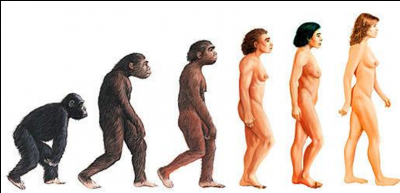
Human Evolution

Human Evolution

Have a look to this website to learn more about where we come from.

You can click here to explore the human origins as well.

Identifying trees

We will see soon how to identify trees, using a dycothomous key.

I´ve found a good example online, click here to have a look and learn how to do it.


SOME VIDEOS ABOUT PHOTOSYNTHESIS


PHOTOSYNTHESIS

Food for plants

Plants use sunlight to make their foodThey use the sunlight and the green in their leaves to make sugars from carbon dioxide (which they breathe in through their leaves during the day) and water. This sugar is then used to give the plant energy so that it can grow. This process is called photosynthesis and is the most important process on the planet, as many other plants and animals depend on plants to survive. Most of the energy is used to make new plant material, although some of it is stored by the plant for use during the months when there is less sunlight.


A breath of fresh air

During the night, plants breathe in oxygen. This is called respiration. The plant also needs minerals to grow, which the plant takes from the soil where they are dissolved in water. The plant releases any water that it doesn't need into the air through its leaves. This is called transpiration.

Plants are the only living organisms that can make their own food. This is one of the main ways of deciding if something is a plant.

Image: Plants use sunlight to make their foodIf plants could not turn the sun's energy into food, we would all die. That is because we can eat all sorts of things plants grow, such as leaves, seeds, fruits, roots, nuts and flowers. But we can't eat sunshine! Text

Light is so important to plants, that their leaves grow in many patterns so as to catch the most light.

JOEY

Here you have some more videos of the development of the joey.


VERTEBRATES

Here you can see again the video we saw in class.

Remember that marsupials give birth to their young, but they´re are still not well developed and that they need to stay inside their mother´s pouch. There, the joey finds the mammary glands and is fed until it´s completely developed.

INVERTEBRATES

Welcome to the invertebrates world!!!

As you know, 95% of the animals in the world belong to the invertebrates group.

To learn more about invertebrates, click here.

Unit 5 Videos

Erase una vez la vida La Celula (1)

Part 2

Part 3

Las Celulas

Matter changes

UNITS 10 & 11 AN INTRODUCTION TO CHEMISTRY AND PHYSICS

Hello my friends!!!

Here you can download the periodic table of elements, the regular one, where you willl find the name of the elements in Spanish, and the one with pictures, with the name of the elements in English.

Feed your curiosity!!!


And more, and more...

And more, and more...

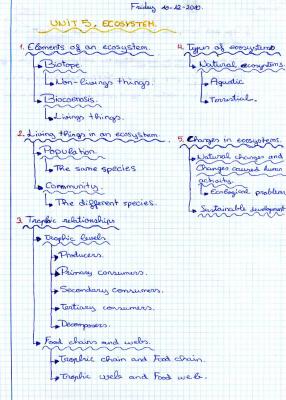
The last outline I´m going to post is this one, made by Leticia (5ºD).

Thank you very much!!!

MORE EXAMPLES

MORE EXAMPLES

Again, another outline as an example!!!

Thanks, Jorge (5ºC).

FOOTPRINT

FOOTPRINT

What is your footprint on Earth?

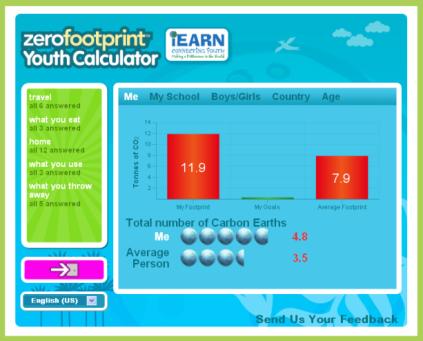
5ºA + 5ºB have taken this quiz to see "How many Earths do we need to satisfy all our needs" if everybody had the same habits as we have.

Those are the results.

We are over the average, and we need almost 5 planets to satisfy our needs.

Think about this.


You can take your own quiz here:

http://meetthegreens.pbskids.org/features/carbon-calculator.html

STUDENT´S OUTLINES

STUDENT´S OUTLINES

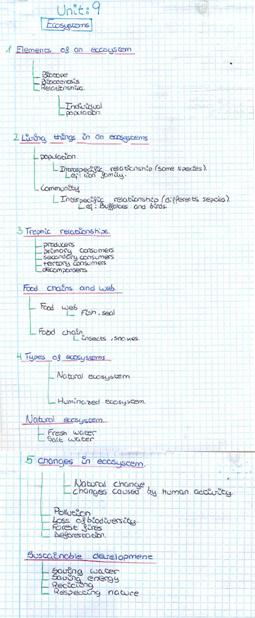
This is Iciar´s outline (5ºA).

Very nice, Iciar! Good job!

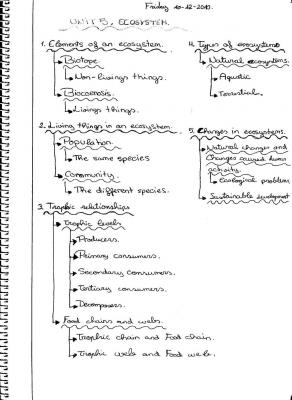
UNIT 5 (9) ECOSYSTEMS

UNIT 5 (9) ECOSYSTEMS

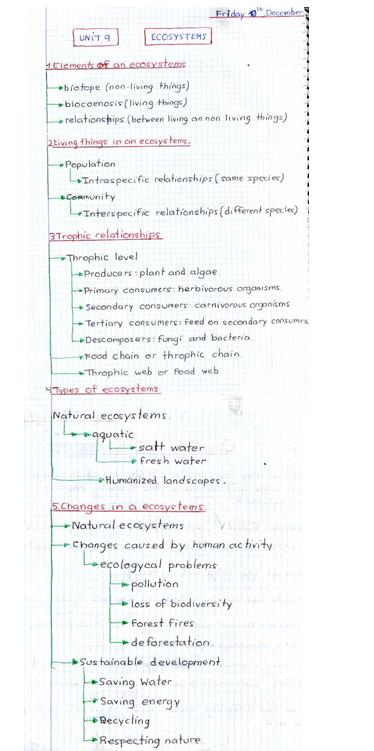
In this last unit of the year, you have done your own outline (congratulations to all of you).

Here you have an example from Raúl Herranz (5ºD). Than you very much for sharing with us your work.

Soon you´ll get some more examples.

LATITUDE AND LONGITUDE

We have finished Unit 2, congratulations to all of you that had studied everyday, that´s the way to be a 10. And to the rest of you, you´ve got time yet!!!

Here´s the video about the latitude and longitude.

ROCKS AND MINERALS

Hello again, here there are the videos we played in class.

Enjoy yourselves.

Next week we are going to start science unit 10. Here you have the power point to start studing.